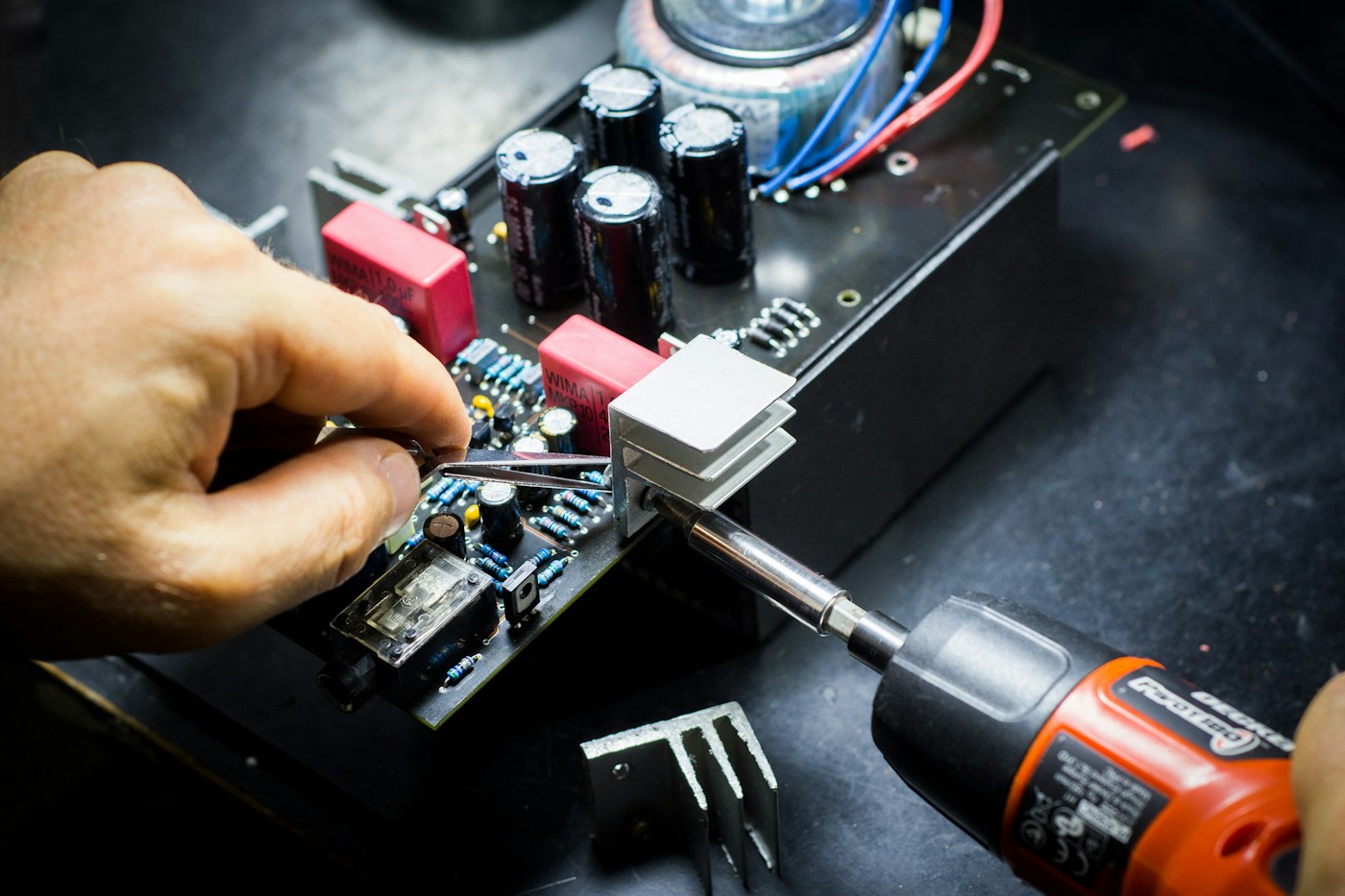
APPLICATION 01
Electronic assemblies
Connect solder, component and board evidence to a controlled bill of materials.
EUROPEAN UNION & EEA / RESTRICTED SUBSTANCES
Build a documented approach to EU restrictions on hazardous substances in electrical and electronic equipment, connecting material evidence, applicable exemptions and product conformity documentation with the design you actually manufacture.

YOUR MARKETEuropean Union & EEA
YOUR FOCUSRestricted substances
OUR APPROACHConnected compliance support

01 / THE BIG PICTURE
RoHS addresses hazardous substances in electrical and electronic equipment placed on the European market. It restricts ten substances, including certain heavy metals, flame retardants and phthalates. Applicability depends on the equipment, exclusions and any precisely defined exemption used by the manufacturer.
A useful RoHS assessment follows the product down to its constituent materials. A test report for one plastic enclosure cannot represent every solder joint, cable and coating in a finished appliance. The objective is a defensible evidence trail linking the marketed model to controlled components and suppliers.
Explore the requirements02 / WHERE IT APPLIES
Start with your product’s intended use and category. Here are some of the applications covered in this service.
Connect solder, component and board evidence to a controlled bill of materials.
Review insulation, metallic finishes and individual material declarations.
Combine purchased-part evidence with the finished equipment file.
These are examples. The applicable route depends on your product specifications and target market.
03 / THE PATH FORWARD
Move from the first assessment to a documented compliance plan, with clear responsibilities and evidence for your product.
Confirm equipment category and applicable exclusions.
Identify suppliers, materials and evidence gaps.
Resolve testing needs and exemption conditions.
Maintain the conformity file as production evolves.
One connected workflow, with your product at the center.
Create your product brief04 / EXPLORE THE DETAILS
Open a topic for guidance on scope, requirements, documentation and practical considerations.
6 topics in this guide
Begin with intended function, electrical dependency and the product category. Check exclusions against the actual design and use case; a supplier calling a part industrial does not establish an exclusion. Record why the equipment is covered and which dates or special provisions affect it.
Restrictions operate at homogeneous-material level, rather than as an average across a complete product. Build a material map that separates coatings, plastics, solder and other distinguishable materials. This gives procurement and testing teams a shared basis for deciding where evidence is strongest and where gaps remain.
Supplier declarations, material specifications and analytical reports serve different purposes. Review their scope before commissioning additional tests. Target uncertainty such as undocumented plating, flexible plastics or changed solder composition, and agree sample preparation with the laboratory so the result answers the actual material question.
RoHS exemptions are limited to defined applications and can change over time. Check the applicable annex, wording, product category and current status. A request for a new exemption does not itself permit use of a restricted substance while that application is under consideration.
For covered equipment, RoHS forms part of the EU conformity documentation and CE-marking assessment. Organise the technical file around product identity, material evidence and the reasoning supporting compliance. A commercial laboratory certificate is supporting evidence; it does not transfer the manufacturer’s responsibility.
Introduce a review point before substituting resins, finishes, cable compounds or electronic components. An equivalent electrical rating does not establish equivalent chemical composition. A simple change record should identify the affected material, previous evidence, replacement evidence and the person accepting the update.
Try “testing”, “documents” or “process”.
Requirements vary by product, intended use and market. Confirm the applicable standards and current regulatory route before proceeding.
05 / A LITTLE MORE CLARITY
Practical answers to common questions about RoHS.
No. It covers the tested sample and stated methods. The manufacturer still needs evidence for the finished equipment and its applicable obligations.
No. They address different chemical requirements and can apply to the same product.
The evidence strategy should reflect material risk and available documentation; one universal testing package is rarely a useful starting point.
Check its current status and exact conditions. Printed expiry dates alone may not explain a pending renewal or transition.
KEEP YOUR POSSIBILITIES OPEN

Identify applicable European requirements, prepare technical documentation, and coordinate the conformity assessment route for your product.
Organize substance information, safety data sheets, technical dossiers, and chemical compliance requirements across applicable markets.
Plan electrical equipment producer responsibilities across European markets, from country registration and product marking to reporting and end-of-life arrangements. WEEE is an ongoing environmental obligation, rather than a one-time product safety certificate.
LET’S PLAN WHAT’S NEXT
Turn your product details and ambitions into a clear starting point.
Create my product briefService marks and organization names identify the standards and regulatory topics discussed. They do not indicate certification of, affiliation with, or endorsement of Complise Global.